
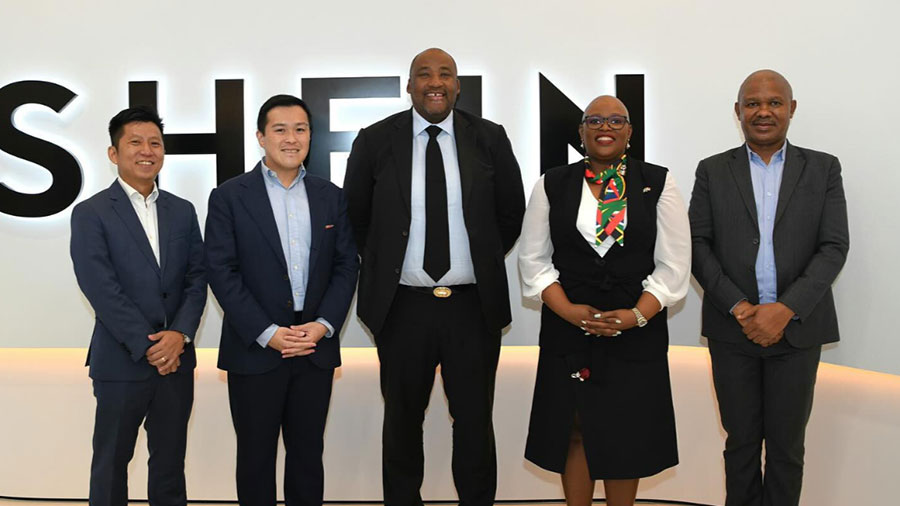

For many local designers, it felt like déjà vu: yet another moment where government leaders choose global corporations over local creatives. But beyond the online debate, this meeting raises deeper questions about how South Africa values its creative economy, and what it means for those building fashion brands from the ground up.
The Problem: Fast Fashion in a Slow Economy
SHEIN represents everything local designers are fighting against — cheap labour, trend-chasing, overproduction, and under-pricing. In South Africa, where thousands of textile jobs have already been lost and designers struggle to manufacture affordably, the idea of welcoming such a giant feels tone-deaf.
South African designers pay high production costs, import fabrics, and operate without strong retail infrastructure or state funding. Meanwhile, fast fashion brands flood the market with pieces that mimic their designs, selling for less than what local designers pay to make a single sample.
So when the Minister, whose role should be to protect and develop South African arts and culture, meets with SHEIN, the message seems clear: the state doesn’t fully grasp the damage fast fashion does to creative livelihoods.
What Other African Countries Are Doing Right
Across Africa, other nations are actively investing in their fashion ecosystems, not outsourcing them.
- Nigeria’s Bank of Industry launched a Fashion Fund to help designers scale manufacturing and export capacity.
- Ghana’s Ministry of Tourism, Arts & Culture supports platforms like Glitz Africa Fashion Week and The Lotte Accra, creating consistent global visibility.
- Kenya’s Creative Economy Bill is establishing formal policies to protect creative intellectual property and link design to national trade policy.
- Rwanda integrates its fashion and textile industries into Made in Rwanda campaigns, supported by local production incentives and government-backed showcases.
These countries recognize what South Africa keeps missing: fashion is not just art, it’s industrial policy. It creates jobs, exports, tourism, and cultural power. When governments empower designers, they grow both identity and economy.
What South Africa Could Be Doing Instead
Imagine if the Department of Sport, Arts and Culture used its influence to fund or commission South African designers, not to court foreign fast-fashion
deals.
Bonang Matheba’s viral tweet recently reminded us how it could look:

That’s not a fantasy, that’s a creative policy waiting to happen.
Government partnerships with local designers could clothe national teams, curate state events, and build global visibility. The result? More jobs, more pride, and less dependency on imported brands that exploit rather than empower.